PacingCarbs

Trail & ultra

Ultra running nutrition: over the long haul, a plan in kilometres means nothing

On rolling terrain your pace varies twofold. A gel « every 5 km » arrives too late uphill and too early downhill. We place intakes on time, and we translate that time into kilometres using your route's real elevation.

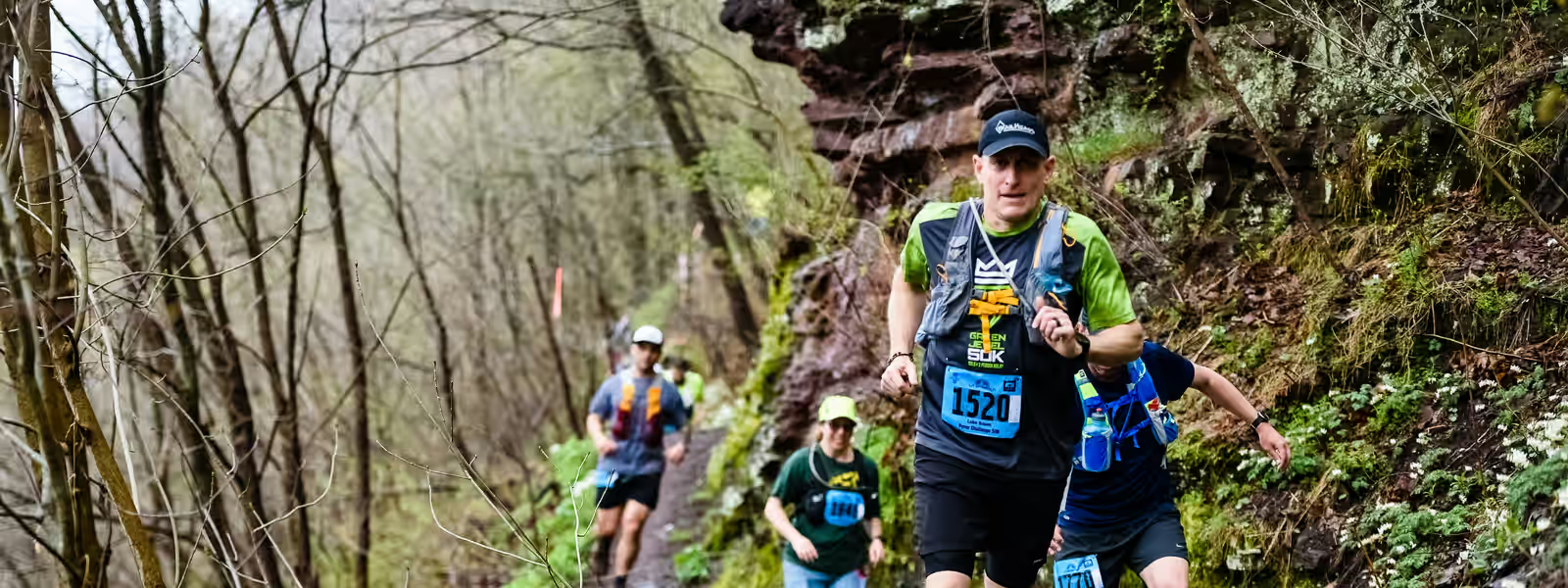
A group of race-numbered runners on a wet, rocky climb.

Built for what ultras actually do to you

Vertical gain is paid in time, not in distance

The effort coefficient is computed at fine grain, on every pair of GPX points, then aggregated. A 500 m segment that climbs 30 m and drops 30 m has zero net gradient but costs far more than flat ground, and the plan knows it.

Steep descents cost you too

The model bottoms out around −12 % then rises again: beyond that, muscular braking and technical ground slow you down. Past −35 % you are slower than on the flat.

A finite pack, real aid stations

You declare what you carry: gels, bars, bottles and refills. The plan tells you what time each stock runs out, and refuses to promise an intake your pack cannot sustain.

The stomach has limits

Liquid intakes stay at least fifteen minutes apart per container, and hydration sips are only allowed when they do not push the carbohydrate curve over its band.
Ultra questions

›How many carbs per hour on an ultra?

From 70 to 100 g/h depending on digestive tolerance, bearing in mind that on an ultra the limit stops being the energy requirement and becomes your stomach. Steady, moderate intakes go down better than large ones spread far apart, and that is exactly what the plan produces by spreading the target across the whole duration instead of concentrating it at aid stations.

›How do aid stations fit into the plan?

The plan reasons about what you carry: you declare your gels, bars, bottles and refills, and it tells you what time each stock runs out. Those times tell you which aid station has to resupply you, and with how much.

›Does the plan account for night and fatigue?

Not as a physiological variable: the effort model describes the cost of running by gradient, not late-race drift. Your target time does account for it though. If you are aiming for 24 h over 100 km, the plan spreads intake across 24 h of real racing rather than extrapolating your starting pace.

Looking for carb guidance across all distances? See the carbs-per-hour ranges on the home page. Racing UTMB? Work out what to carry for it.

The races, one by one

Each page runs the calculation on the event's official track, with its profile, its gradients and the intake spacing that follows from them.

All races →

Plan my race